What is chalk in DFS? When to eat it and when to fade it
Chalk is the most popular play on a slate: the players most of the field will roster. The word comes from sports betting, where the favorite's odds were written in chalk on the board. In daily fantasy, chalk is not good or bad by itself. What matters is whether a popular player is popular for the right reasons.
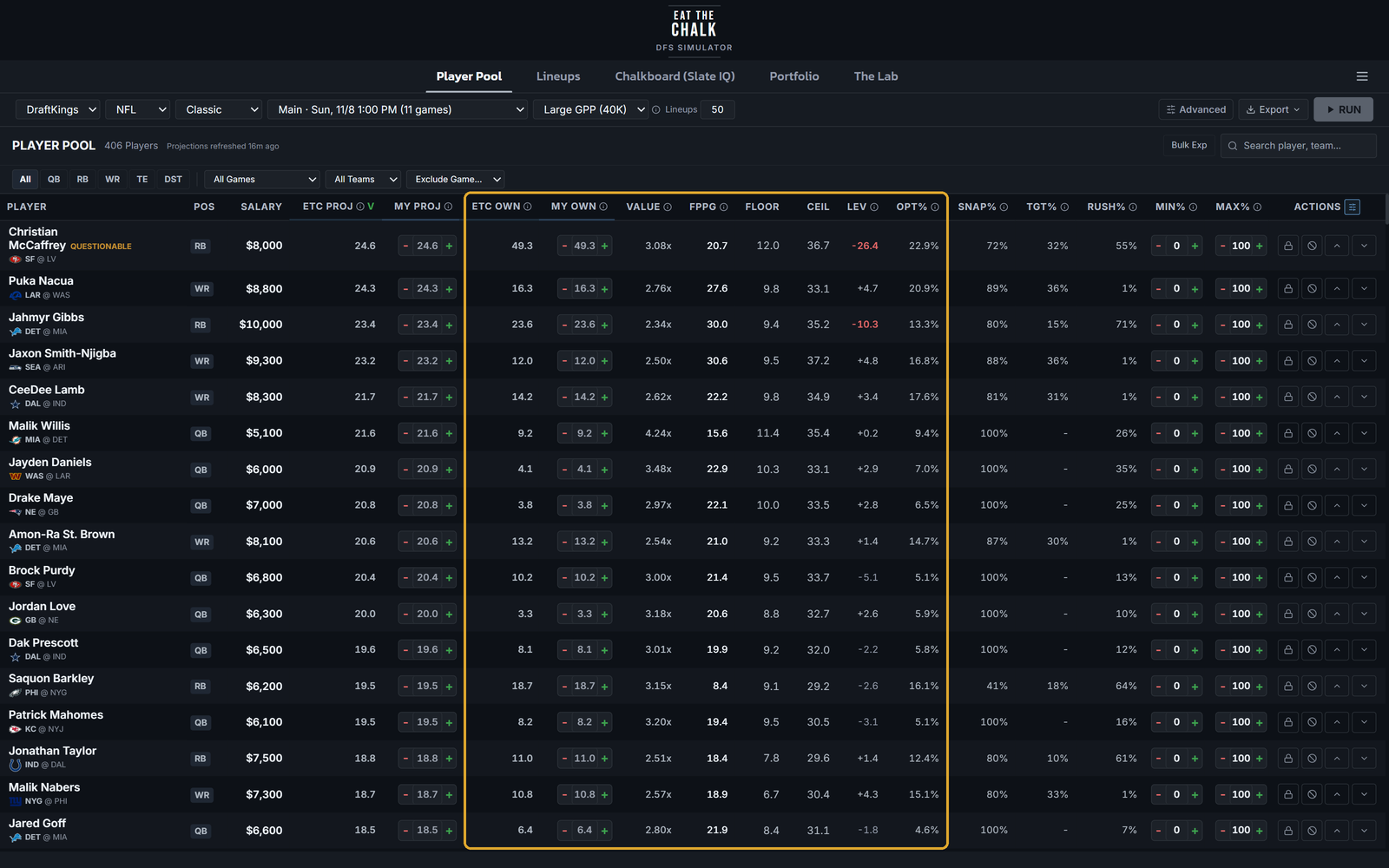
What makes a player chalk
A player turns into chalk when the obvious reasons to play him pile up and most of the field notices the same thing at the same time. The usual causes:
- Price below the role: an injury pushes a backup into a starting job before his salary catches up.
- The matchup: a weak defense, a fast pace, or a high game total.
- Vegas lines: big implied team totals pull the field toward that team's top players.
- Late news: a ruled-out starter on Sunday morning can make his replacement the most-owned player on the slate in an hour.
Chalk shows up in every sport: the min-priced starting running back in NFL, the injury fill-in in NBA, the ace pitcher against a weak lineup in MLB.
Popular is not the same as right
The question to ask about any chalk play is simple: does he win more often than he is owned? Good chalk helps a lineup win more often than the field plays him, so fading him costs you. Bad chalk is owned more than he wins, so the field is overpaying for him and every lineup that skips him gains ground when he misses.
One way to measure it is leverage: how often a player is in the top simulated lineups, minus his projected ownership. A running back projected at 40% owned who shows up in 52% of the sims' top lineups has +12 leverage. That is good chalk. A receiver at 30% owned who shows up in 11% has -19. That is bad chalk, and the place to look for a pivot.
Cash games and tournaments treat chalk differently
In cash games (50/50s, double-ups, head-to-heads) you only need to beat about half the field, so most good chalk belongs in your lineup. Fading a popular player who hits leaves you behind most of the room.
In tournaments (GPPs) you need to finish near the top, and that means being different somewhere. The usual approach: eat the good chalk, fade the bad chalk, and win the lineup with the spots where you differ from the field. The bigger the field, the more ownership concentrates and the more one bad chalk play matters.
How to pivot off the chalk
A pivot is the player you play instead of a chalk play you are fading: usually the same position, a similar salary, and a ceiling close enough that he can match the chalk's best game, at a fraction of the ownership. When the chalk fails, every lineup with the pivot jumps the part of the field that played him.
Pivots work best with a reason behind them, not just low ownership. A cheap player nobody rosters because he rarely scores is not leverage. A pivot the sims put in winning lineups is.
How Eat The Chalk handles chalk
The name is the philosophy: eat the chalk worth eating and fade the rest. The simulator is built around telling the two apart.
- Projected ownership builds the field: every lineup you build is ranked against a simulated field that rosters players the way the real contest will. See DFS ownership projections.
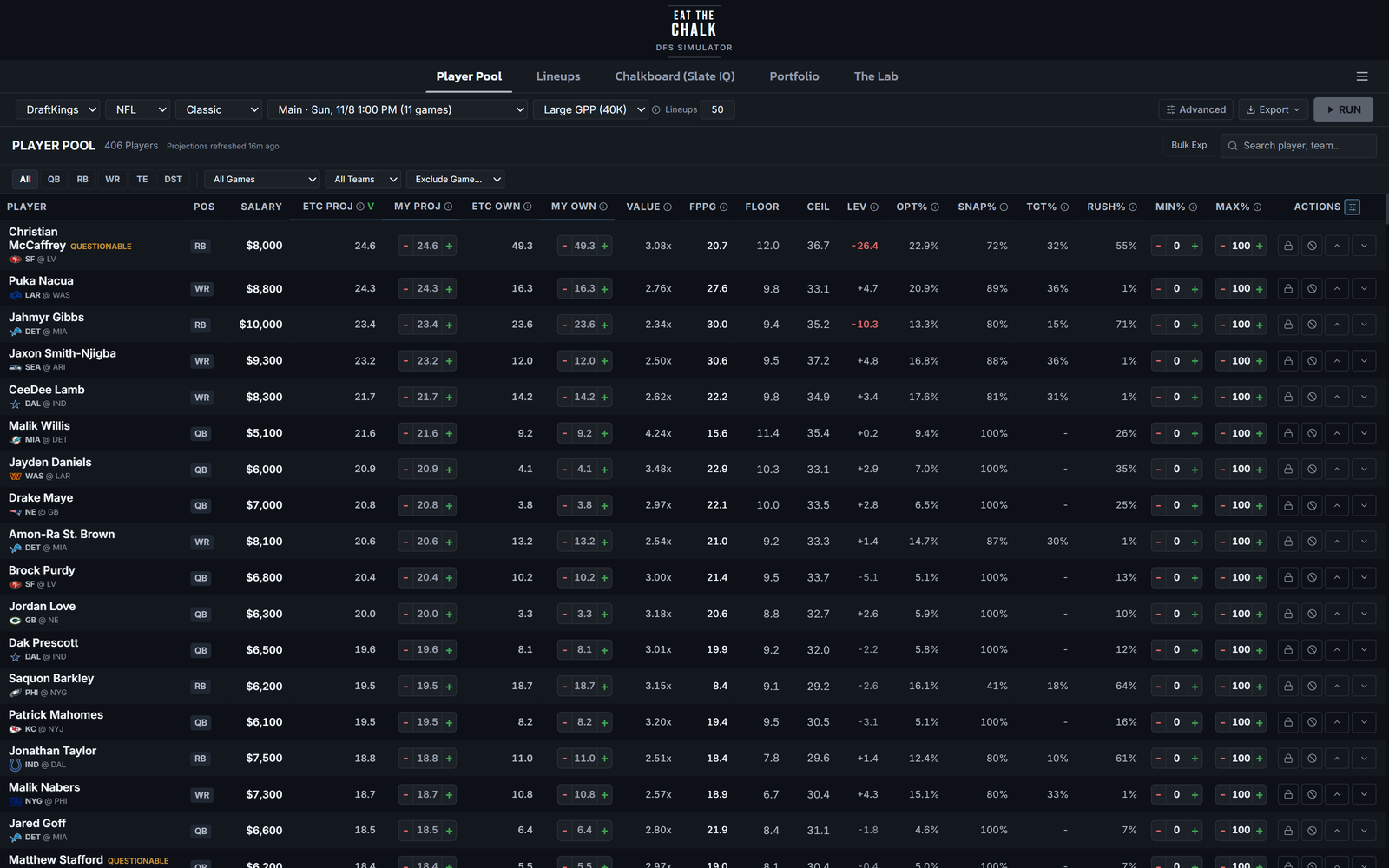
- Opt% and leverage: the player pool shows how often each player is in the top simulated lineups next to his ownership. NFL classic and DraftKings Showdown.
- Good chalk and bad chalk: Slate IQ calls out which popular plays the sims back and which they fade.
- Chalk control: lean the whole build toward the chalk or away from it, by as much as you want.
- Max lineup ownership: cap each lineup's total projected ownership. NFL classic.
- Captain chalk: in Showdown, captain ownership is projected and editable separately from FLEX.
Weekly NFL breakdowns with the slate's chalk, pivots and leverage plays are on the articles page.
Pro-level simulation without the pro-level bill
Full-access DFS simulators and optimizers commonly run $75 to $350 a month. Eat The Chalk All Pro is $59 a month for every sport, with up to 100,000 simulations per slate, our own projections and ownership, live late swap and up to 300 lineups per run. Only play one sport? Starter is $10 a week, plus $5 for each sport you add.
Range from the published monthly prices of popular DFS simulator and optimizer subscriptions, checked November 2026. Their prices change, so check each site for current pricing.
Questions, answered
What does chalk mean in DFS?
Chalk is the most popular play on a slate: the players with the highest projected ownership, who most of the field will roster.
Why is it called chalk?
It comes from sports betting, where bookmakers once wrote the odds on a chalkboard and the favorite became known as the chalk.
What does eating chalk mean?
Eating chalk means rostering the popular players instead of fading them. It is usually right in cash games and right in tournaments when the chalk wins more often than it is owned.
Should you fade chalk in GPPs?
Fade the bad chalk, not all of it. A popular player who helps lineups win more often than he is owned is worth playing even in a large tournament. Fade the chalk the field is overpaying for, and pivot to a similar player the sims like.
What is a chalk pivot?
A pivot is a lower-owned player at a similar position and salary that you play instead of a chalk play. When the chalk fails, lineups with the pivot pass the part of the field that rostered him.
How do I know who will be chalk?
Projected ownership. Eat The Chalk projects ownership for every player on DraftKings and FanDuel slates and scales it to your contest size, free with the demo. See DFS ownership projections.
Is there a free version?
Yes. The free demo includes ETC projections and ownership, Slate IQ and real sims: 3 free runs per slate, up to 10 lineups and 5,000 sims per run, on main slates plus Thursday, Sunday and Monday night NFL showdowns. Exporting and editing projections come with a paid plan, which starts at $10 a week.
Find out which chalk to eat
Start free with the demo, or go straight to Starter at $10 a week. Cancel anytime.